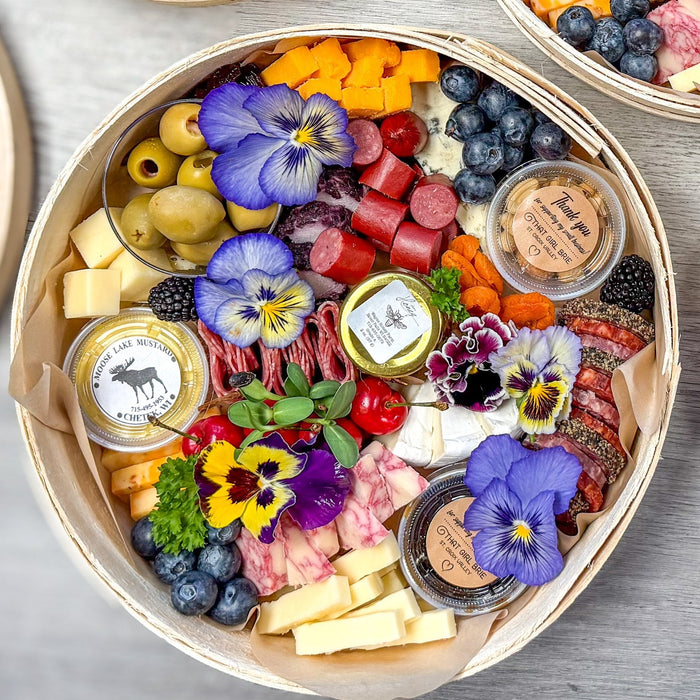
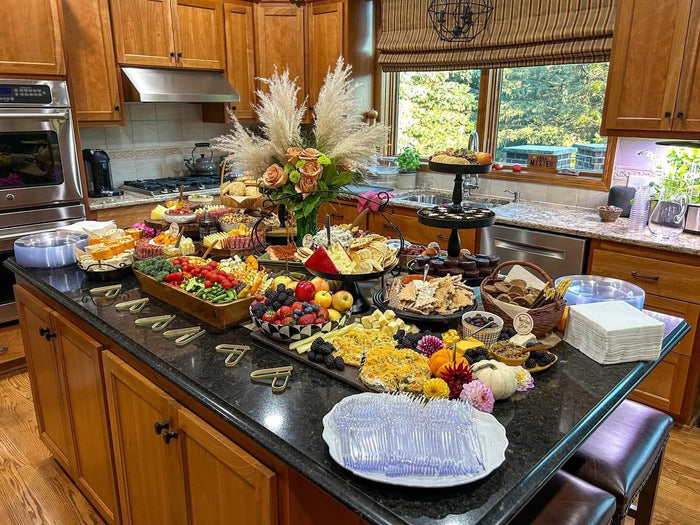
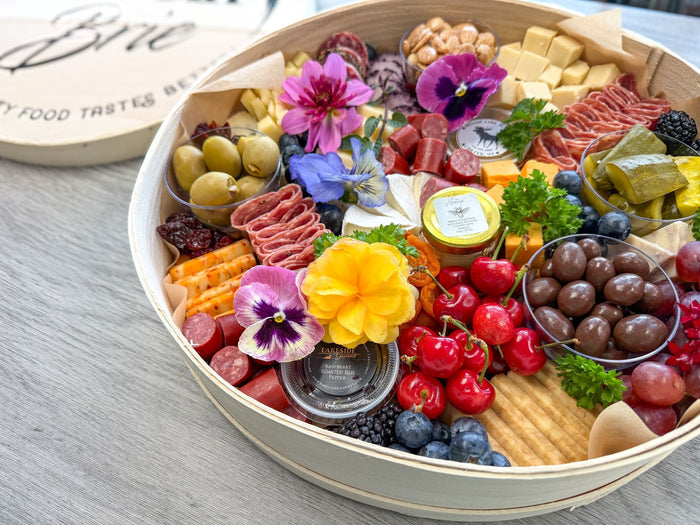
So, what goes on a charcuterie board? The short answer: cheese, cured meat, something crunchy to carry it, something fresh, something salty, something sweet and something to spread. Aim for three to five cheeses, two or three meats and a handful of extras. Fill every gap and you've got a board. Here's exactly what goes on a charcuterie board, plus how to cut cheese for charcuterie boards so every piece is easy to grab.
Here's the full list from the cheesemonger's counter.
Cheese (the star)
Pick three to five cheeses with different textures and flavors. A good mix looks like this:
- Aged or sharp: aged cheddar, gouda, parmesan.
- Soft and creamy: brie, camembert, fresh goat cheese.
- Blue: gorgonzola or another blue for the bold crowd.
- Flavored: a pepper jack, herb cheese or flavored cheddar. This is where Wisconsin shines. Shop our Wisconsin artisan cheese for cheddars with bourbon, merlot, olives, peppers and more.
Meat
Two or three cured meats is plenty: a salami, a prosciutto and maybe a summer sausage or snack sticks. Go for a mix of thin and silky with thick and hearty.
Crackers and bread
You need something to carry all that cheese. Pick at least two: a plain, sturdy cracker that won't snap under a thick slice, and something with seeds or texture. Sliced baguette is always welcome.
Fresh fruit and veggies
Grapes, berries, apple and pear slices, figs when you can find them. Cucumbers, cherry tomatoes and snap peas add crunch and color. Fresh stuff keeps a board from feeling heavy.
Something salty
Olives, pickles, cornichons, marcona almonds or roasted nuts. A little briny bite between cheeses keeps everyone coming back.
Something sweet
Dried apricots, dark chocolate, candied pecans, a drizzle of honey. Sweet next to salty is the whole point.
Spreads and dips
Fruit jam or preserves, honey, whole grain mustard. Fig jam with blue cheese, hot pepper jelly with cheddar, honey with goat cheese. Put them in little bowls with tiny spoons.
Garnish
Fresh rosemary, thyme or edible flowers. Totally optional. Also totally worth it. Pretty food tastes better.
The tools
A board is only as good as your ability to eat it. Set out a small knife for each soft or blue cheese, a sturdy knife for firm cheese, little spoons for jams and honey, and small tongs or picks for olives and meats. Cocktail napkins nearby. Your guests will thank you.
Pairings that always work
Not sure what goes with what? Start with these easy matches:
- Sharp cheddar with apple slices and a little mustard.
- Brie with berries, honey or fig jam.
- Blue cheese with pears, walnuts and honey.
- Hot pepper cheese with something sweet, like jam or dried apricots, to cool the heat.
- Salami with olives and a crisp cracker.
- Prosciutto wrapped around melon or a fresh fig.
Rule of thumb: pair rich with bright, salty with sweet, and creamy with crunchy.
Make it seasonal
The base stays the same all year. The extras change with the calendar. Spring calls for strawberries, snap peas and fresh herbs. Summer brings cherries, peaches and cherry tomatoes. Fall is all apples, pears, figs and candied pecans. Winter loves pomegranate, clementines, dark chocolate and sugared cranberries. Swap the fruit and your board feels brand new.
A simple shopping list for 8
Hosting eight people for appetizers? Here's a list you can take straight to the store:
- Three cheeses, one 8 oz block each (one sharp, one creamy, one fun)
- One salami and one package of prosciutto
- Two boxes of crackers or one baguette plus one box
- A big bunch of grapes and a pint of berries
- A cup of nuts and a jar of olives or cornichons
- One jar of jam or a little honey
- A bar of dark chocolate
Double the cheese and meat if the board is dinner.
What to skip
Some things just don't play nice on a board. Skip anything that turns soggy fast (sliced bananas, juicy tomatoes cut too early), anything that needs to stay hot, and very wet dips that run into the crackers. Keep those in their own bowl or save them for another day.
How to Cut Cheese for a Charcuterie Board
Cut cheese by its shape and texture: slice firm blocks into thin rectangles or triangles, cube semi-soft cheeses, break aged cheeses into rough chunks, and leave soft cheeses whole with a small knife. Cut only part of each cheese so guests can tell what it is, and keep a separate knife for blue.
Firm block cheese (cheddar, jack)
Slice the block into planks about a quarter inch thick, then cut each plank into squares or triangles. Triangles look fancy and take zero extra effort. Cubes work too, especially for kids.
Aged and crumbly cheese (aged cheddar, parmesan)
Don't fight it. Use the tip of a sturdy knife to break it into rough, bite-size chunks. Those craggy edges look beautiful on a board.
Soft cheese (brie, camembert, goat cheese)
Leave it whole, or cut one wedge out to invite people in. Set a small spreader right next to it. Chill it well before you cut so it doesn't squish.
Blue cheese (gorgonzola)
Crumble it or cut small wedges, and give it its own knife. Blue has a big personality and likes to share it.
Wedges
For a wedge, cut thin slices from the point toward the rind, like slicing a pie. Everyone gets a little of the center and a little of the edge.
Putting it all together
Now that you know what goes on it, our step-by-step guide to how to make a charcuterie board walks you through the build, from the first cheese to the last sprig of rosemary.
Rather skip the shopping and slicing? We get it. Our charcuterie boards come fully loaded and styled. Order online at least 72 hours ahead and pick up in River Falls. More questions? Head back to Ask the Cheesemonger.
Once you know what goes on a charcuterie board, the fun part is mixing and matching. Start with a few of our Wisconsin cheeses and build from there.